
Our Technology

Safety First is embedded throughout Pony.ai’s autonomous driving technology and operations. Our proprietary PonyWorld world model continuously improves the driving capabilities of the Pony.ai Virtual Driver. We use 100% automotive-grade autonomous driving components to enhance vehicle-level stability and reliability, while comprehensive system redundancy provides safeguards in the event of component or system failures. Safety also extends to fleet operations, enabling driverless vehicles to operate safely and reliably at scale.

· Advanced Technology Approach ·

Virtual Driver

10×+ Better Safety Performance Than Human Drivers

Pony.ai develops the Virtual Driver, an autonomous driving system designed for a wide range of vehicle types and applications, delivering safe, reliable, and advanced autonomous driving technology across mobility and logistics.

L4 Virtual Driver VS L2 Assisted Driving

L4 Virtual Driver

Pony.ai’s Virtual Driver provides L4 autonomous driving capability. At L4, the system performs the entire driving task without requiring a human driver to operate the vehicle.

L2 Assisted Driving

At L2, the system assists the human driver with the driving task. The driver must remain in the driver’s seat, stay attentive to the road, and be ready to take control when needed.

PonyWorld World Model

A Virtual Training Environment for AI Driver

PonyWorld is Pony.ai’s proprietary world model and a virtual training environment for the Virtual Driver. Within PonyWorld, the Virtual Driver experiences diverse driving scenarios and continuously trains to improve its driving capabilities. Around 2020, Pony.ai began developing PonyWorld 1.0, bringing reinforcement learning into its autonomous driving technology and enabling the Virtual Driver to surpass human driving performance. PonyWorld 2.0, released in 2026, takes this further through self-diagnosis and self-evolution, enabling the Virtual Driver to continuously improve beyond its previous capabilities.

PonyWorld 2.0
Core Capabilities
  • Icon

    Self-Diagnosis

    Leveraging the Intention semantic layer of Pony.ai’s onboard model, PonyWorld 2.0 automatically traces and analyzes each driving decision, identifies the root cause of issues, and feeds diagnostic results directly back into model training.

  • Icon

    Targeted Evolution

    Based on self-diagnosis results, PonyWorld 2.0 automatically identifies scenarios where the world model requires greater accuracy and generates targeted data collection tasks to address those gaps.

  • Icon

    Faster Iteration

    PonyWorld 2.0 generates targeted training scenarios based on weaknesses identified in the onboard model, significantly reducing the storage and compute overhead of low-value training data while improving the efficiency and effectiveness of each iteration.

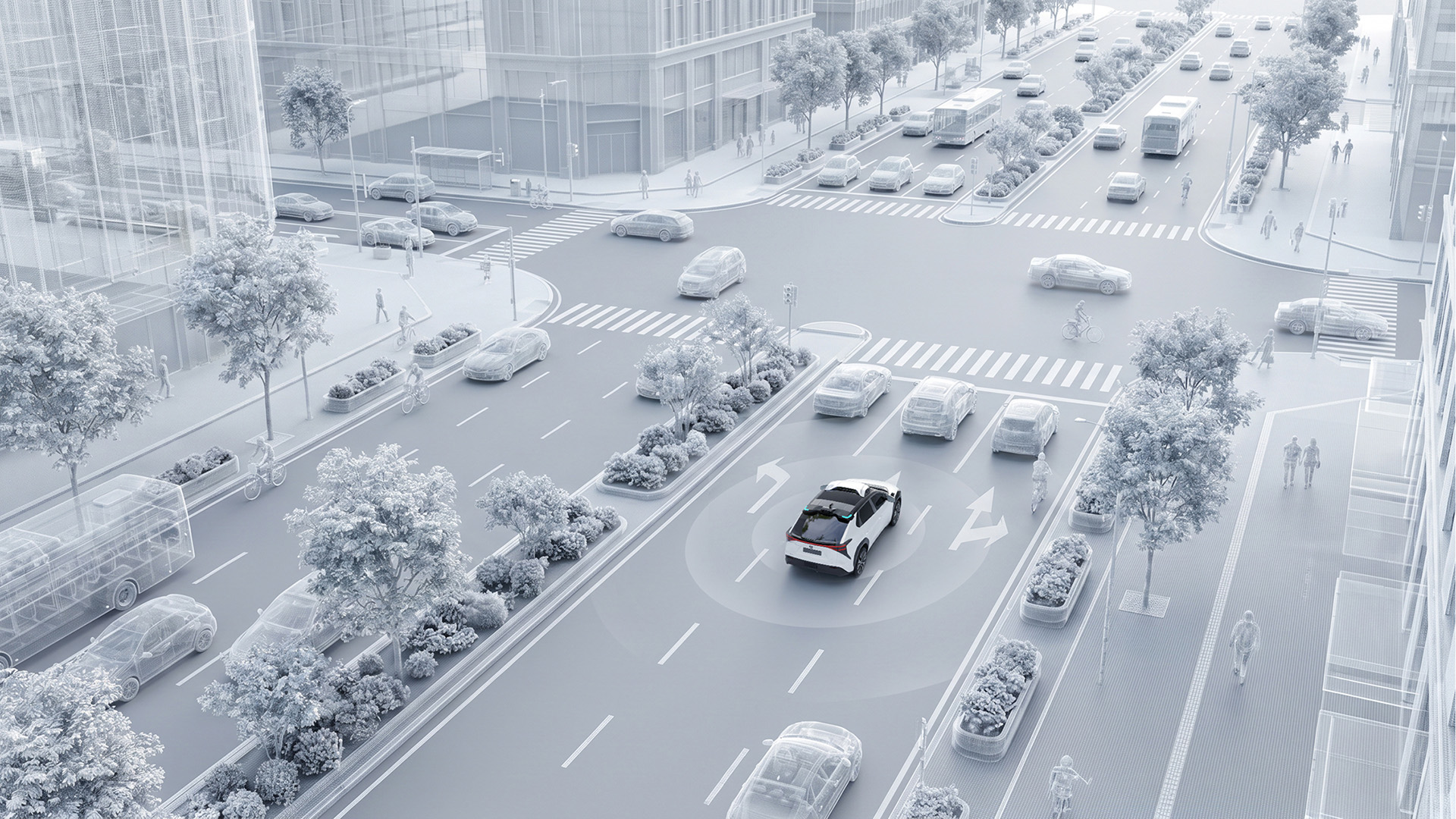
Driving is fundamentally a dynamic interaction of intent among road users.

A world model must accurately simulate how different situations may unfold. The Virtual Driver and other road users continuously influence one another. PonyWorld models how other road users may behave under different conditions, helping ensure the Virtual Driver can drive safely across a wide range of possible outcomes.

Scenario Simulation 1

Play Icon

Scenario Simulation 2

Play Icon

Scenario Simulation 3

Play Icon

Scenario Simulation 4

Play Icon

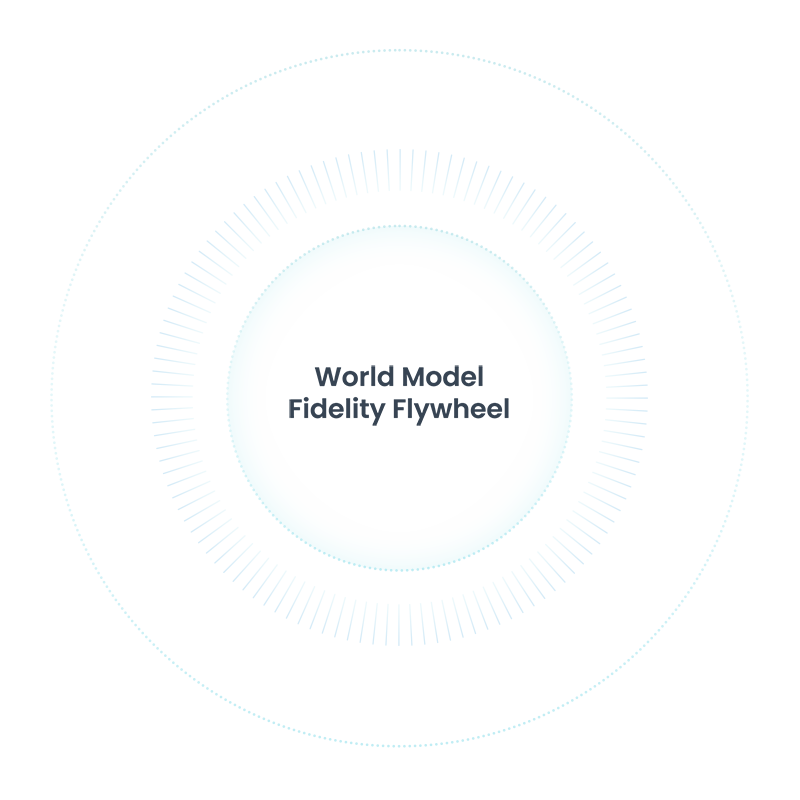
A Higher-Fidelity World Model
Makes a Better Virtual Driver

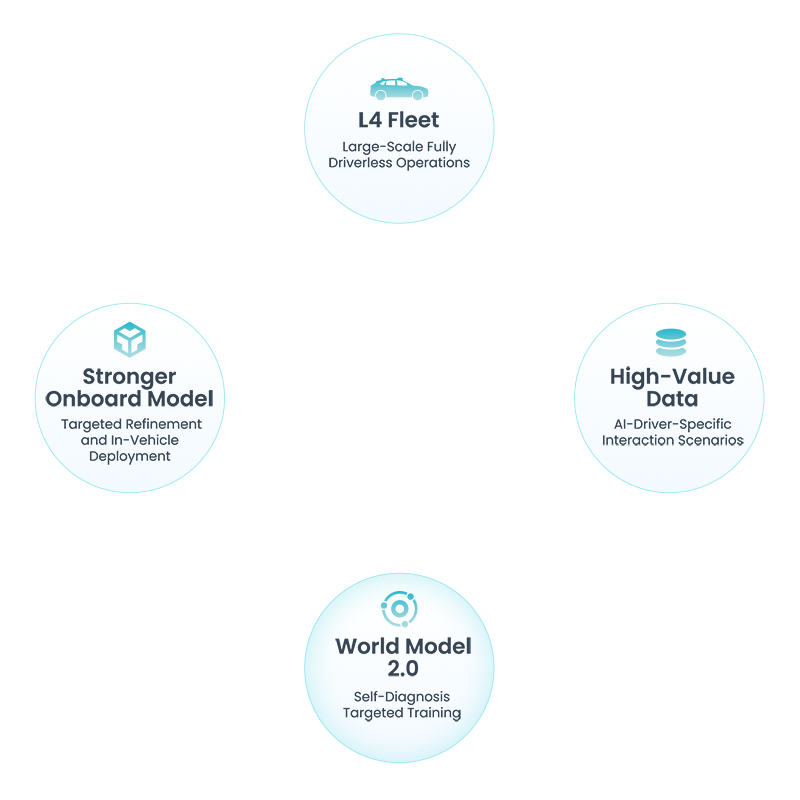
A self-reinforcing fidelity flywheel continuously improves PonyWorld, enabling the Virtual Driver to drive better with each iteration.

World Model
· Built to Automotive Standards ·

Automotive-grade standards set rigorous requirements for quality, reliability, and durability. Meeting these standards helps improve vehicle stability, safety, and service life while reducing lifecycle costs. Today, Pony.ai’s autonomous driving products use 100% automotive-grade components.

Deep Software Optimization Icon

Deep Software Optimization

The software stack is continuously optimized for evolving hardware standards, enabling full-vehicle automotive-grade reliability.

Automotive Industry-Standard Testing Icon

Automotive Industry-Standard Testing

Electrical, electromagnetic compatibility (EMC), climatic, mechanical, chemical, and highly accelerated life testing (HALT).

Functional Safety Development — ISO 26262 Icon

Functional Safety Development — ISO 26262

Hardware and software development processes and quality management systems meet ISO 26262 functional safety requirements.

· Comprehensive Redundancy Architecture ·

L4 autonomous driving safety goes beyond algorithms. It requires system-wide safeguards across both hardware and software.

20+ Safety Redundancies

Protecting the System, the Vehicle, and People

Arrow Icon
7
Types of ADK Software Redundancy
  • Multi-Layer Degradation System Redundancy
  • Fault Detection and System Arbitration Module Redundancy
  • Heterogeneous Algorithm on Main and Fallback System
  • Communication Redundancy on Main and Fallback System
  • Trajectory Cross Validation Redundancy on Main and Fallback System
  • Multi-Sensor Fusion Perception & Localization Redundancy
  • Multi-Algorithm Fusion Redundancy of Key ADS Modules
7
Types of ADK Hardware Redundancy
  • N×360° FOV coverage
  • Redundant Systems of Computing Units
  • Redundant Localization Sensors
  • Redundant Cellular Network Communications
  • Redundant Accident Detection
  • Redundant Storage for Key Data
  • Redundant Sensor Cleaning
5
Types of Vehicle Platform Redundancy
  • Redundant Parking Brake System
  • Redundant Steering System
  • Redundant Braking System
  • Redundant Power Supply
  • Redundant DBW System
3
Types of User Interaction Redundancy
  • Redundant Safety Warning outside the Car
  • Redundant Unlock Method by Cellphone NFC
  • Redundant System for Emergency Calls

1,000+ Monitoring Mechanisms

Continuous Visibility into System Safety

  • Safety-by-design and agile, data-driven iteration provide comprehensive monitoring coverage to reduce the risk of system failures.
  • 1,000+ safety monitors, combined with system safety-state design and multi-layer fallback functions, help keep the vehicle safe in the event of system abnormalities.

Fail-Operational Capability

A Standard for L4 Autonomous Driving

In the event of a software or hardware failure, the vehicle remains safely under control and continues operating until it can pull over in a safe location. This helps prevent loss of control, collisions, and unsafe stops in active lanes that could lead to rear-end crashes or traffic disruption.

Safe Fleet Operations

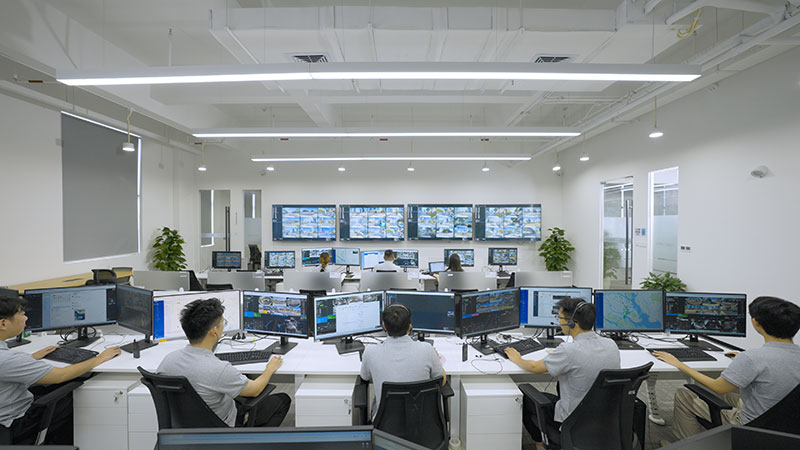
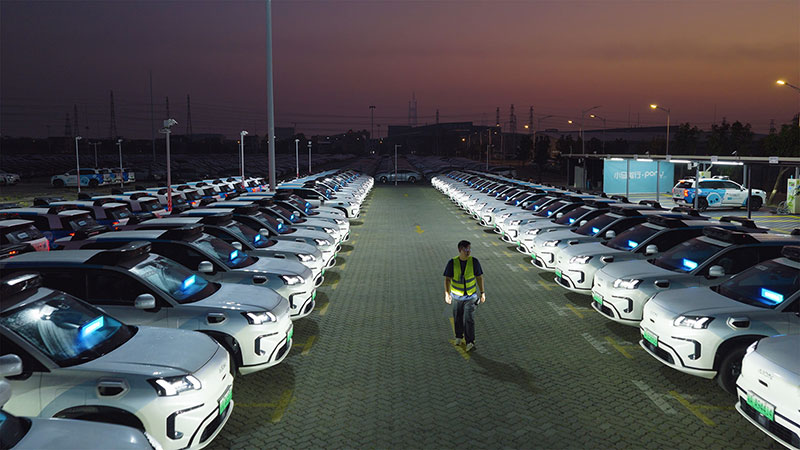
Fleet safety is as important as vehicle safety. Pony.ai’s safety network spans the entire operating area, supporting safe fleet operations at scale through three lines of defense: prevention, detection, and response.

Play Icon
Detection
Response

Ride with Pony.ai

footer
Pony.ai
Stock Symbols NASDAQ: PONY HKEX: 2026.HK
Close icon